
Column: In baby wildlife season, human intervention is not always the answer
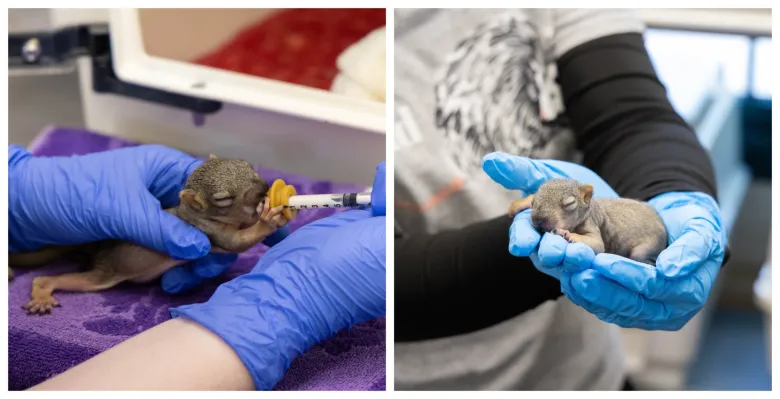
At just four weeks old, this tiny squirrel is growing up at Pasadena Humane’s Sandra J. Goodspeed Wildlife Center. Orphaned alongside a sibling, the pair were brought to safety and are now receiving expert care. Once they’re old enough to forage and survive on their own, they’ll be released back into their natural habitat.
Baby wildlife season is upon us. From mid- to late February, orphaned young wild animals begin arriving at our Sandra J. Goodspeed Wildlife Center.
The first real indicator is an uptick in calls to our Wildlife Helpline. Our staff and volunteers provide guidance in a wide range of situations, often helping people determine whether an animal truly needs intervention.
Early in the season, we commonly receive calls about newborn, or pinky, opossums found in a deceased mother’s pouch or baby squirrels that have fallen from their nests. These early cases signal that breeding season has begun and that many more animals will be arriving in the weeks ahead.
It is important to say something that can feel counterintuitive. The majority of baby wild animals found by people do not need to be rescued. Except in cases of injury, illness or true orphaning, a young wild animal’s best chance of survival is to remain with its mother.
Removing a healthy baby from the wild can unintentionally separate it from a parent that is still actively caring for it. It also creates stress that can affect development, lead to illness and in some cases, sadly, result in death.
“The truth is that most babies people find are experiencing a normal stage of development, not an emergency,” shares Niltzyn Camacho, our wildlife coordinator and a certified wildlife rehabilitator.
Young opossums, for example, separate from their mothers in the wild when they are only about the size of a dollar bill. Fledgling birds spend time on the ground as they build strength and learn to fly, with their parents continuing to care for them nearby.
It’s quite common for parents to spend time away from their young. They may be foraging for food to bring back to their babies. Some species have multiple nests and move their young between them. Others, like deer, leave their offspring alone for long stretches of time, since the presence of the adult can attract predators.
When in doubt, the best first step is to avoid picking up or touching the animal. Instead, take a photo or short video and consult the experts, like our team at Pasadena Humane.
Through our Wildlife Helpline, we can assess whether a baby animal is at risk and provide next steps. Our website also includes clear guidance on what to do if you find a baby bird or mammal, walking through common local species and scenarios.
Of course, there are situations where a baby wild animal truly needs help. In those cases, our staff and volunteers are ready to provide care.
Each year, we successfully rehabilitate and release hundreds of orphaned, ill and injured wild animals. During the height of the season, our wildlife team may be caring for dozens of animals at a time, each requiring species-specific diets, housing and careful medical oversight.
Our goal from the start is to return every healthy animal to its natural habitat. We know an animal is ready for release when it demonstrates the normal behaviors required to survive without human support. The best outcome is when the animal leaves our care and resumes its life in the wild.
As wildlife season continues, I encourage our community to pause before intervening and to reach out when unsure. We are here to guide you on the right course of action that will result in the best possible outcome for that animal.
For information on the Wildlife Helpline and resources on what to do if you find a baby wild animal, go to pasadenahumane.org/wildlife
Chris Ramon is president and CEO of Pasadena Humane.
This blog post originally appeared as a column in the Pasadena Star-News on February 27, 2026.