
Column: Keeping pets safe during daytime coyote territorial season
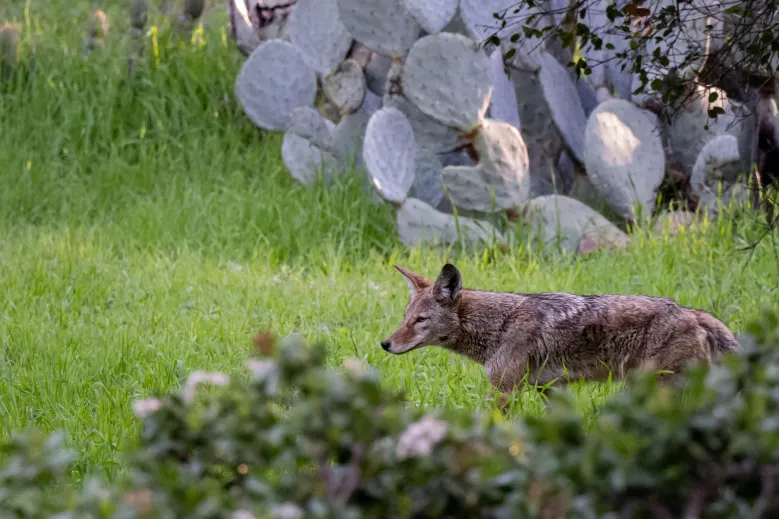
Coyote sightings have been in the news recently, and right now we’re also in the middle of coyote mating season (January–March). During this time, coyotes are more active during the day as they search for a mate. Pasadena Humane is here to help with guidance and practical steps to reduce conflicts and keep pets safe. For tips and to learn more, visit pasadenahumane.org/coyotes. In the photo, a coyote wanders the hills in Altadena on Thursday, January 8, 2026. (Photo by Sarah Reingewirtz, Los Angeles Daily News/SCNG)
Over the past few weeks, wildlife has made headlines across our area. In Pasadena, a coyote followed a young boy in his front yard. In Glendale, a mountain lion attacked a small dog during a late-night walk. Stories like these naturally cause concern, especially for families and pet owners.
While Pasadena Humane does not have jurisdiction over coyotes or mountain lions, we are here to help. Providing guidance and resources to help people and wild animals coexist as safely as possible is an important part of our work. Much of the information we share comes from our director of Wildlife Education & Services, Lauren Hamlett, who works closely with our community on wildlife-related issues year-round.
Right now, we are in the middle of coyote mating season, which typically occurs from January through March. During this time, it’s more common to see coyotes out during the day. They also tend to be more vocal.
Mating season means coyotes are searching for a mate and locating a den site. They are also establishing territory and making sure neighboring coyotes are not moving into their habitat.
Because coyotes are more active during the day, the likelihood of encounters with people and pets increases. During mating season and the months that follow, coyotes may also be more territorial around den sites. That can sometimes make them appear bolder.
The good news is that coyotes are generally not a threat to people. In fact, bites to humans are extremely rare. While the recent encounter in Pasadena was understandably frightening for the family involved, there was no sign the coyote was acting aggressively.
Encounters like these can feel sudden and alarming. At the same time, coyotes have lived in and around our neighborhoods for decades, and most of the time they move through quietly and avoid people.
Pets are a different story. Small dogs and outdoor cats are at higher risk, especially if they’re left unattended or off leash.
There are practical steps you can take to greatly reduce the chance of conflict. Keep cats indoors or in a secure outdoor space, such as a catio. Supervise your dogs when they are in the yard and always walk them on a leash that is 6 feet or shorter. Dawn and dusk tend to be peak coyote hours, so consider adjusting your walking routine to avoid those times.
If you see a coyote, consistent, assertive hazing is important. Coyotes may stand their ground briefly, especially if they have learned to associate food with people or neighborhoods. Hazing reinforces that they should keep their distance and maintain a healthy fear of humans. Effective techniques include yelling, waving your arms, spraying water or using tools such as an umbrella or a scare stick.
It’s just as important to remove attractants. Secure trash and compost bins. Don’t leave pet food outside. Pick up fallen fruit. Trim overgrown landscaping and raise hedges at least 6 inches off the ground to reduce hiding spots. Close off crawlspaces under homes and decks.
Lauren believes that when it comes to reducing conflicts with coyotes and other local wildlife, community education is key. “Simple awareness, not fear, is what keeps both pets and wildlife safe,” she shares.
Through regular programming, a resource library on our website, and our wildlife helpline, we continue working to build a healthy, sustainable community that values all species.
Coyotes are part of our local ecosystem. Learning how to live alongside them responsibly benefits both people and wildlife.
If your neighborhood or community group would like a presentation or event tabling, visit our website or email wildlife@pasadenahumane.org. We are here to help.
Chris Ramon is president and CEO of Pasadena Humane.
This blog post originally appeared as a column in the Pasadena Star-News on March 6, 2026.